
A recent interlocutory decision in nuisance proceedings before the Supreme Court of Western Australia is a reminder that not all strata scheme disputes end up in the State Administrative Tribunal.
In Perth Day Hospital Pty Ltd v Fitness Cartel Western Australia Pty Ltd,[1] the court was asked to rule on injunctive relief sought by a private day hospital operator against a gymnasium business in the same building, on the floor above.
The building in question was the subject of a strata scheme consisting of several lots.
The plaintiff day hospital operator reportedly spent some $16M on fitout works from around November 2024, eventually opening in June 2026. The defendant, on the other hand, had commenced its own fitout in March 2025, and started business in late 2025.
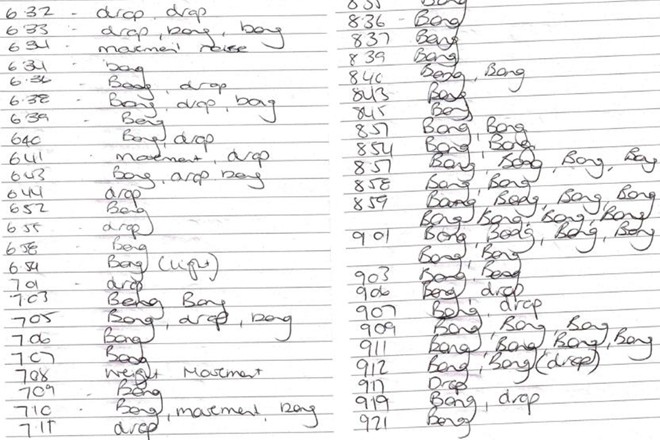
The plaintiff’s claim was that excessive noise and emanating from the gymnasium (“music and the sound of falling or dropping weights”), and vibrations associated with dropped weights and gym equipment use, amounted to actionable nuisances.
The plaintiff was successful in securing orders for interim restraints which prohibited the defendant from playing music at a volume that was audible in the day hospital, and from using weights (including medicine balls and kettlebells),[2] pending trial.
Since the most recent substantive amendments to the Strata Titles Act 1985 (WA) (“Strata Titles Act”), the Tribunal has often been coined as the “one-stop-shop” for strata scheme disputes in WA.[3]
As a result, it is often incorrectly assumed that the Tribunal is the appropriate (if not only) forum for the resolution of disputes involving strata lot owners and occupiers.
For example, it is common for noise and disruption complaints to be prosecuted on the basis of alleged scheme by-law contraventions, including as breaches of standard conduct by-laws,[4] rather than through the tort of nuisance. The plaintiff day hospital operator in Perth Day Hospital could potentially have framed its claim along similar lines,[5] and pursued orders analogous to injunctive relief in the Tribunal.[6]
However, Tribunal proceedings may not always be the only or most appropriate forum for resolution of a strata-related dispute.
Parties to strata-related disputes should therefore consider seeking legal advice at an early stage regarding the available forums for their dispute, and the different risks, remedies and other factors applicable to alternate dispute resolution pathways.
How we can help
For assistance with strata and commercial property disputes, please contact our Michael Stork.
Disclaimer
This post has been prepared as a general summary only. It is not, and is not intended to be, legal advice with respect to any particular matter. This post should not be relied on with respect to any particular matter without taking legal advice. Stork Davies Legal Advisors disclaims liability to any person who relies on this post without taking legal advice from the firm.
[1] Perth Day Hospital Pty Ltd v Fitness Cartel Western Australia Pty Ltd [2026] WASC 228.
[2] The defendant unsuccessfully sought to vary the restraint terms to allow the use of some weights.
[3] See for example https://www.landgate.wa.gov.au/siteassets/documents/strata-and-community-titles/strata-titles/strata-information-guides/landgate_guide-to-resolving-disputes_2021.pdf.
[4] Schedule 2 by-law 2(b) provides that “an owner or occupier of a lot must … not use the lot or permit it to be used in such manner or such purpose as causes a nuisance to an occupier of another lot (whether an owner or not) or the family of such an occupier”.
[5] Depending on the content of the scheme by-laws applicable to the case.
[6] Section 200(2)(m) of the Strata Titles Act allows the Tribunal to make “an order requiring a person … to refrain from taking specified action to remedy a contravention or prevent further contravention of … scheme by-laws”. The Tribunal is also empowered under section 201(1) of the Act to “make an order on an interim basis … if satisfied that by reason of the urgent circumstances of the case it should do so”.
[7] Produced at paragraph [18] of the court’s decision.